The Three Things Every Leader Wants From a Team Offsite (And How One Leader Actually Got Them)
Forshay’s Experience on Team Effectiveness
Most well-designed team offsites feel incredible…in the moment. The biggest challenge is what happens next. Where does the energy go? What insights were turned into action items with clear accountability and worked on?
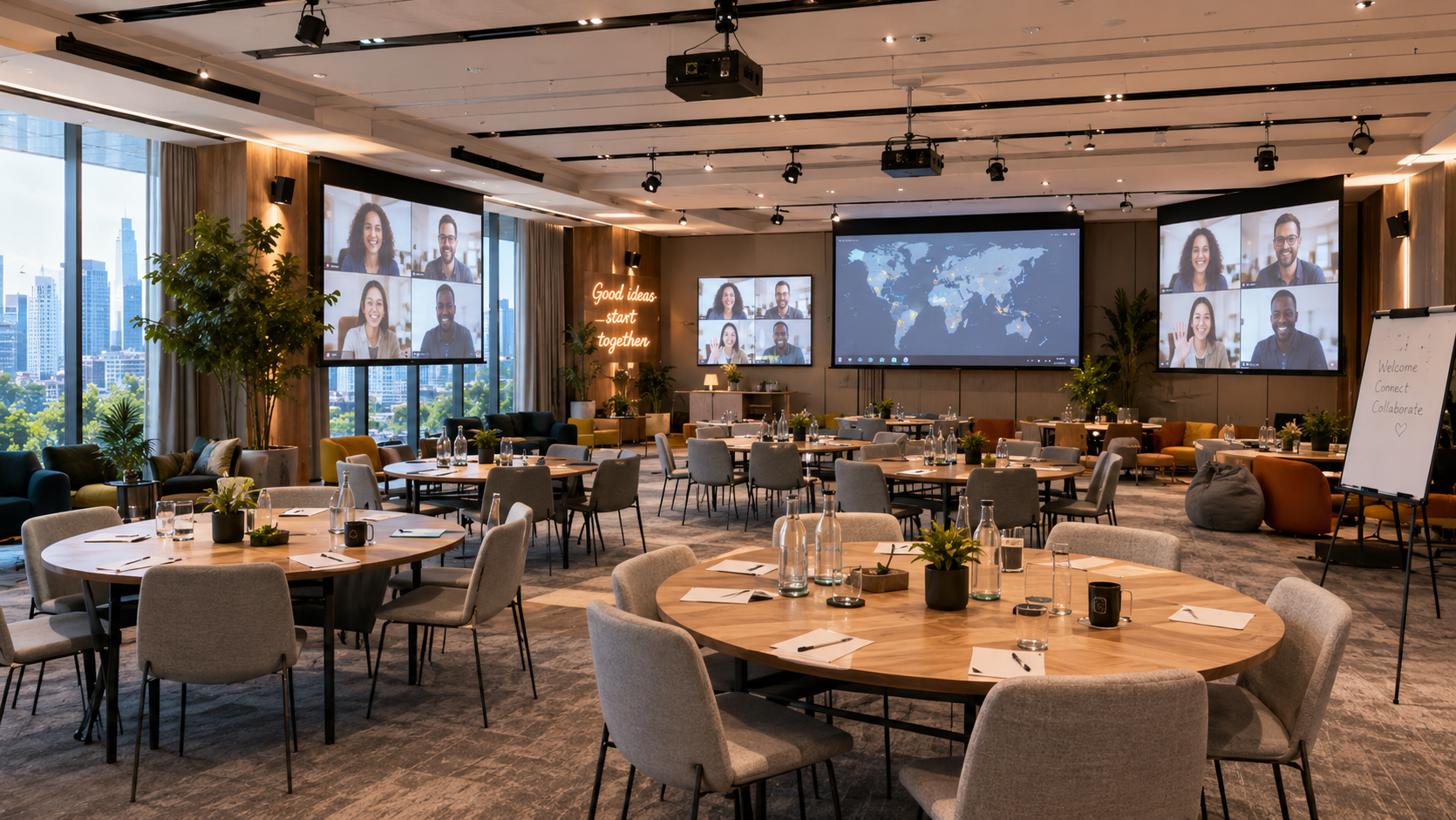
Recently, we partnered with a senior leader at a major AI organization in designing a two-day team offsite (or in this case, onsite as they were globally dispersed and have a stunning HQ), and the results were a masterclass in what happens when you design with intention and co-creation with your team.
The Setup: Co-creation with better prep tools

This leader did something most don’t: he invested time (3-4 meetings of 30 minutes) in the design phase before anyone got in a room together. Instead of jumping straight to agenda-building, he worked with us to gather meaningful data from his team first — what they were struggling with, what they needed, where they felt disconnected, and also what was going well to build on.
The key move? He used our favorite tool – Balloon (and we’re such fans that Sally is an Advisor to Balloon) — open-ended prompts that gave every team member a voice before the gathering even started. What makes Balloon more than a survey tool is that it moves into co-creation with participants who are able to see each other’s responses and build on them, pump them up (or not if they don’t resonate), all in an anonymous way that limits cognitive biases and results in a heat map across the full team. Then, on Day 1, he put those responses up on screen. The message was unmistakable: We heard you. This is why we designed the experience this way.
That single act — showing the team their own input reflected back in the design — contributed to psychological safety before the first breakout session even began.
The Results: Three Outcomes That Matter

After the gathering, the team’s feedback clustered around three outcomes, ranked in order:
1. Connectivity. The team felt like one team — not siloed groups reporting to the same leader. This was the highest-rated outcome, and it’s not a soft metric. Connectivity creates trust in sharing ideas. Trust creates better collaboration with faster speed. Faster and quality collaboration creates better output. It’s a causal chain. The ‘just hire smart people and get out of the way’ approach sounds clean, but it skips over a few decades of organizational psychology, behavioral economics, and social science research on how teams actually perform.
2. Roadmap Clarity. People left with a clearer sense of what’s being prioritized and why. In a fast-moving environment, knowing where you’re headed — and what you’re not doing — is one of the most underrated gifts a leader can give their team.
3. Tools for the Moment. The team felt they had started building a combined (of course AI driven) toolkit for navigating their current market challenges. Not a complete toolkit…two days can’t do that, but a foundation. And starting is enough when the starting is done well.
The Real Work: What Happens After

Here’s the part most leaders skip. The gathering ends, everyone’s energized, and then… silence. The leader we worked with asked exactly the right question a month later: How do I hold onto this energy?
Our advice came down to a few principles:
Reinforce the language. Customer research tells us people need to hear a message 8 to 12 times before it sticks. The same is true for your team. If connectivity, prioritization, and tools were your three pillars, keep naming them — in all-hands meetings, in Slack, in how you frame decisions. Repetition isn’t redundant. It’s how things become real.
Restructure existing rituals. You don’t need new meetings. You need your existing meetings to carry the gathering’s DNA. Can your monthly all-hands be organized around those three themes? Can shout-outs and demos map to connectivity and tools? Small structural changes signal that the offsite wasn’t a one-time event — it’s how your living the ideas out loud.
Connect every move back to the story. This leader happened to be making an organizational change shortly after the offsite — moving a direct report into a new role that aligned with the team’s stated desire to evolve from into a more strategic, advisory one. By framing the move as a direct response to what the team asked for, it becomes evidence of follow-through, not a disconnected reorg.
Communicate, then communicate again. The most underutilized leadership skill, still, is communication. Leaders consistently overestimate how much their teams already understand. If you’re thinking, “they already know this,” they probably have a glimmer, but is it fully metabolized? Send the note. Name the connection. Say it one more time.
The Bigger Lesson
What made this engagement work wasn’t a magic framework or a proprietary tool. It was a leader who was willing to go slower in the design phase so he could go deeper in the execution. He modeled co-creation by bringing his team’s voice into the room. He modeled vulnerability by asking what he should keep doing after the offsite ended. And he modeled follow-through by building the offsite/onsite themes into his operational rhythm.
That’s the difference between a gathering that evaporates and one that compounds.
Every leader wants connectivity, clarity, and capability building for their team. The ones who get it are the ones who design for it — and then do the quieter, harder work of sustaining it.
At Forshay, we partner with leaders to make great teams and make teams great — from executive search and interim leadership to culture, organizational design, and team effectiveness. If you’re thinking about how to get more from your next offsite (or how to keep the last one alive), we’d love to talk.